
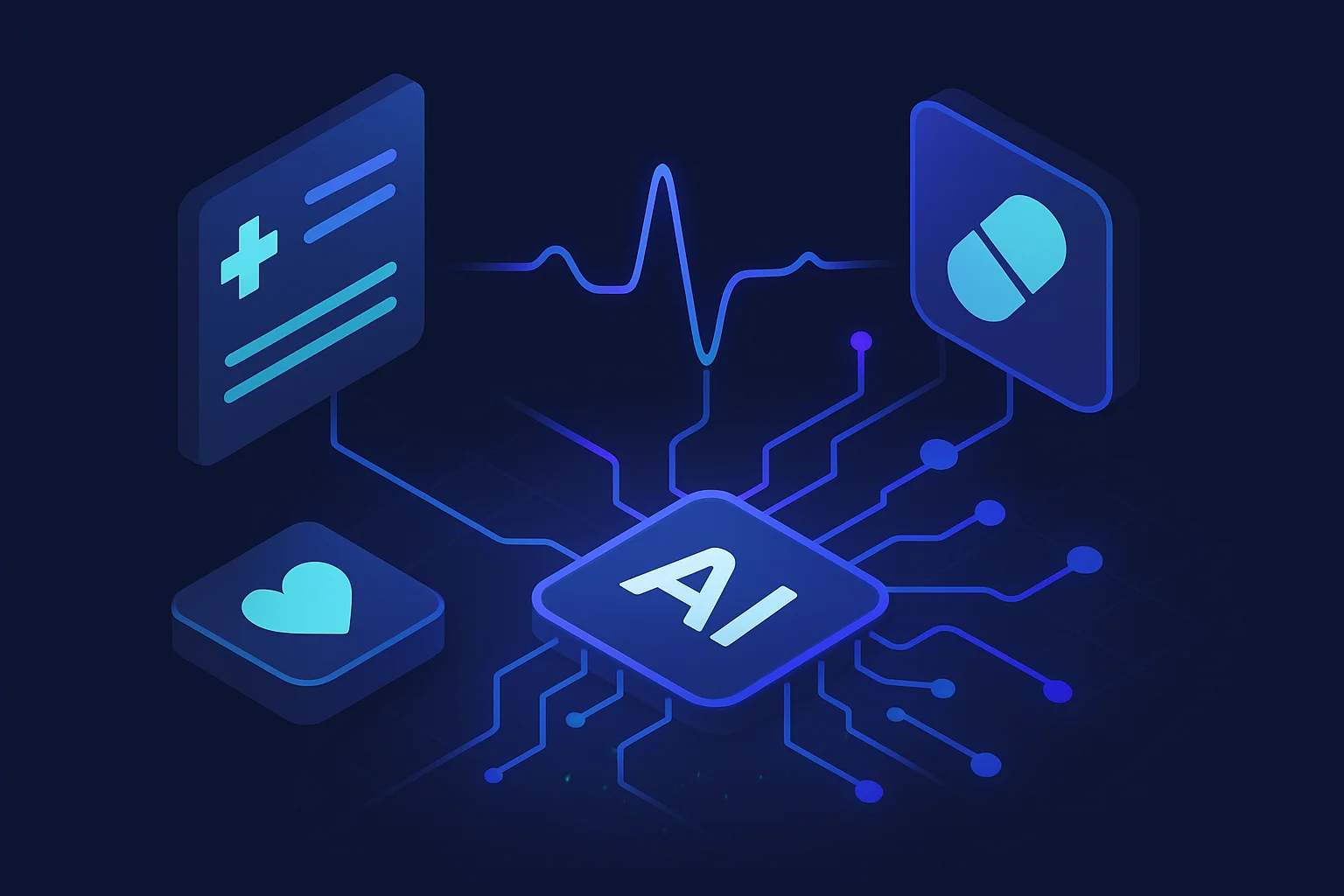
Do you spend hours decoding your blood test results or wondering if you should really worry about that weird result? We've all been there: pages of incomprehensible medical jargon and Google diagnosing you with cancer when you just have a cold. OpenAI just launched ChatGPT Health, a new space that directly connects your medical records and health apps to AI.
The thing is, it raises as many hopes as questions about your privacy.
In this article
What exactly is ChatGPT Health?
Announced on January 7, 2026, ChatGPT Health is a new dedicated space within ChatGPT. Not a separate app, but a walled-off zone where you can connect your health data for personalized conversations with AI.
The thing is, it's not just a gimmick: 230 million people ask health questions to ChatGPT every week. OpenAI decided to structure this properly rather than letting people throw their medical info around haphazardly.
Specifically, you can connect:
| Source | Availability | Examples |
|---|---|---|
| Wellness apps | Worldwide | Apple Health, MyFitnessPal, Peloton, Weight Watchers |
| Electronic medical records | US only | Via b.well: 2.2 million providers, 320 insurers |
| Activity data | iOS required | Sleep, steps, heart rate via Apple Health |
To be honest, this is the first time a mainstream AI chatbot offers such direct access to complete medical data. We're talking medical history, current treatments, test results, allergies... Your entire clinical record.
What you can actually do with it
OpenAI highlights several use cases, and some are real game changers for everyday life.
Understand your test results
You receive your blood tests with terms like "MCV", "MCH" or "creatinine"? ChatGPT Health can explain in plain English what it means, taking your history into account. No more panicking because a value is slightly out of range.
Prepare your medical appointments
The AI can synthesize your recent symptoms, current treatments, and history so you arrive at the doctor with a clear summary. Fewer omissions, more efficiency.
Track your health trends
Blood sugar, sleep quality, physical activity... ChatGPT Health can analyze evolution over several months and alert you to patterns you wouldn't have noticed.
Navigate insurance options
For Americans, this is particularly useful: AI can compare different insurance plans based on your actual care habits.
Important
OpenAI is very clear about this — ChatGPT Health is not intended to diagnose or replace a doctor. It's a companion tool, not a substitute. The company worked with over 260 doctors in 60 countries to develop this feature.
How it works technically (without losing you)
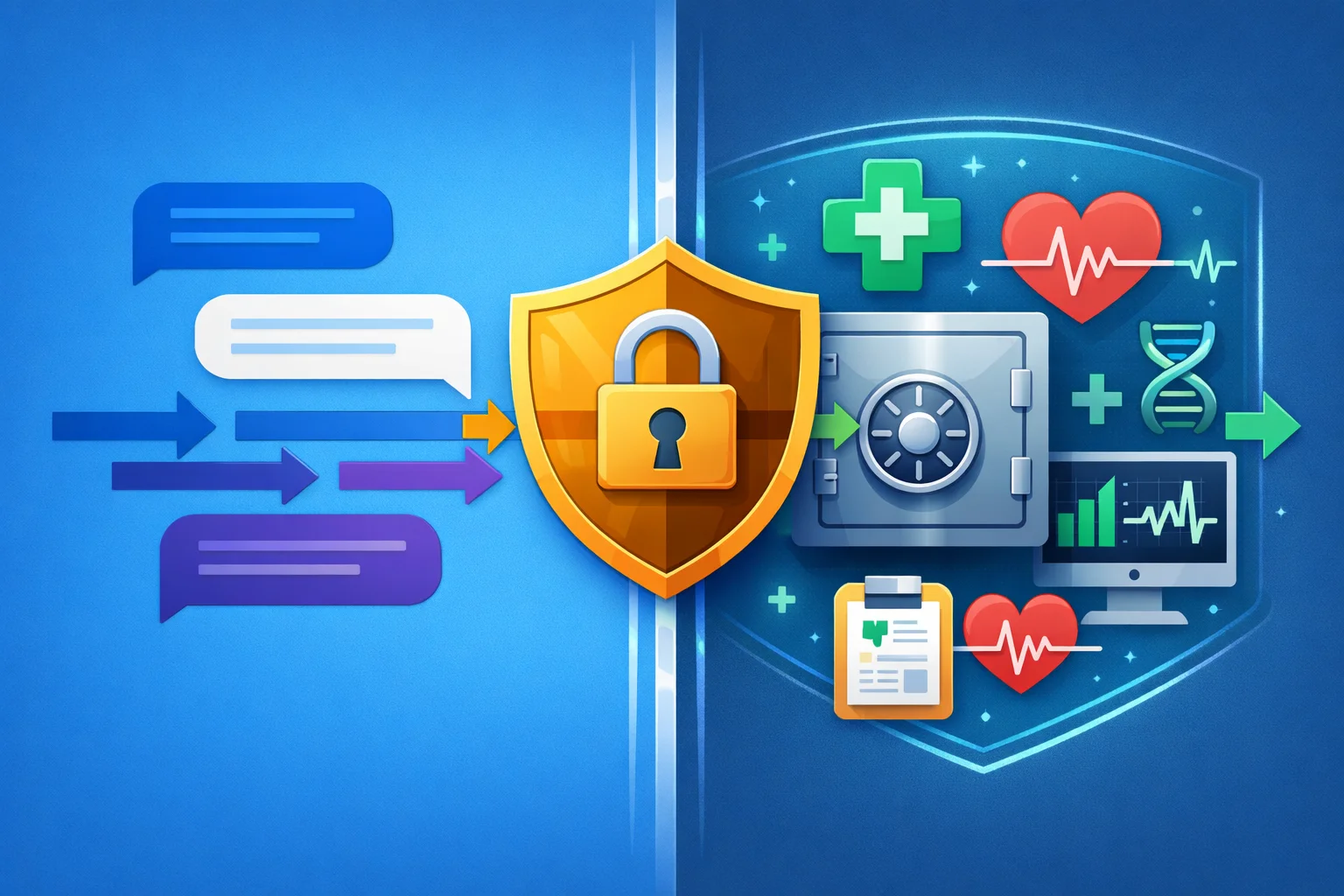
Spoiler alert: OpenAI went all out on security. Here's how it's architected:
Complete data isolation
Your Health conversations are stored separately from your other chats. Health info never "contaminates" your regular ChatGPT memory. You can view and delete your Health data at any time in settings.
Enhanced encryption
OpenAI talks about "additional layers of protection" specifically designed for health: dedicated encryption, data segmentation, technical isolation.
No training on your data
This is the crucial point: OpenAI states that Health conversations are not used to train its models. Your medical data remains yours.
The b.well partnership
For medical records connection (US only), OpenAI relies on b.well, an interoperability platform that transforms clinical data into AI-optimized format. They're the bridge between hospital systems and ChatGPT.
The privacy problem: Should you worry?
I'll be honest with you: despite all these protections, there are gray areas worth dwelling on.
No HIPAA regulation
In the US, HIPAA law protects your health data... but only when held by healthcare professionals. OpenAI isn't one. In case of a leak, you wouldn't have the same legal recourse as if your hospital got hacked.
Risk of misinformation
Language models are designed to be helpful, not medically accurate. Studies have shown that even on basic drug equivalencies, AI can be wrong. And it tends to give you the answer you want to hear rather than the one you need.
Future advertising model
OpenAI is actively exploring ads in ChatGPT. In fact, the company has started testing ads in the free version. If tomorrow advertisers can target based on health data... you see the problem. The company assures that Health data will remain "watertight", but that's a promise, not a legal guarantee.
My advice
Assume that any info you put in these tools is never 100% private. It's not pessimism, it's digital realism.
Why Europeans are excluded (and it's not changing soon)
If you're in France or elsewhere in Europe, you may have noticed: ChatGPT Health is not available in the European Economic Area, Switzerland, or the UK.
Why? GDPR, plain and simple.
European regulation classifies health data among the most sensitive. To process it legally, you need:
- Ultra-precise granular consent
- Subcontracting agreements with all partners
- Privacy impact assessments
- Data hosting in Europe (to avoid transfers to the US)
Standard ChatGPT is already subject to complaints with CNIL and other European regulators. For ChatGPT Health, obstacles are even higher with the AI Act imposing strict rules on "high-risk" AI systems in health.
The thing is, France already has Mon espace santé and the DMP (Shared Medical Record), public and regulated tools. The philosophy is radically different: a state-controlled system vs an American commercial intermediary.
For now, no launch date in Europe. And frankly, given the regulatory context, it could take years.
Pros and cons
+ Pros
- Natural language interface to understand your medical data without jargon
- Centralization of all your health info (apps, records, history) in one place
- Optimized preparation for medical appointments with automatic synthesis
- Longitudinal tracking of your health trends over several months
- Data isolation: your Health info doesn't pollute your other conversations
- Cons
- No HIPAA protection in the US = less recourse if something goes wrong
- Risk of medical inaccuracies (AI can be wrong on important topics)
- Unavailable in Europe for now
- Future advertising model potentially problematic for privacy
My advice
If you're in the US and want to test ChatGPT Health, start with non-critical data. Connect a fitness or sleep app first, see how AI uses it, then decide if you want to go further with your actual medical records.
And above all, never take a ChatGPT Health response as a diagnosis. Use it to prepare your questions, understand your results, but the final medical decision should always go through a real healthcare professional.
For us Europeans, we watch and wait. The DMP and Mon espace santé remain the official tools—maybe less sexy, but regulated and with solid legal guarantees.
Frequently Asked Questions
Can ChatGPT Health replace my doctor?
No, absolutely not. OpenAI is very clear: it's a companion tool to better understand your data and prepare your consultations. It doesn't diagnose or prescribe treatments.
Is my health data used to train AI?
According to OpenAI, no. Conversations in the Health space are not used to train models. But it's a company promise, not a legal obligation.
When will ChatGPT Health be available in Europe?
No date announced. GDPR and AI Act constraints make a European launch very complex. It could take years, or never arrive in this form.
How do I delete my ChatGPT Health data?
You can view and delete your Health data at any time in your ChatGPT account settings. The space is designed to give you complete control over what you share.
Conclusion
ChatGPT Health marks a turning point: for the first time, a mainstream AI chatbot offers direct access to complete medical data. It's a real advancement for those struggling to understand their tests or navigate the healthcare system.
But this revolution comes with legitimate questions about privacy, response reliability, and OpenAI's future business model. For Europeans, the regulatory wall remains impassable for now.
To dive deeper into AI and health, check out our other articles in the AI News section.
About the author: Flavien Hue has been testing and analyzing artificial intelligence tools since 2023. His mission: democratizing AI by providing practical and honest guides, without unnecessary technical jargon.
🚀 Stay ahead on AI
Get the latest AI news, tools and tips delivered to your inbox every week.