
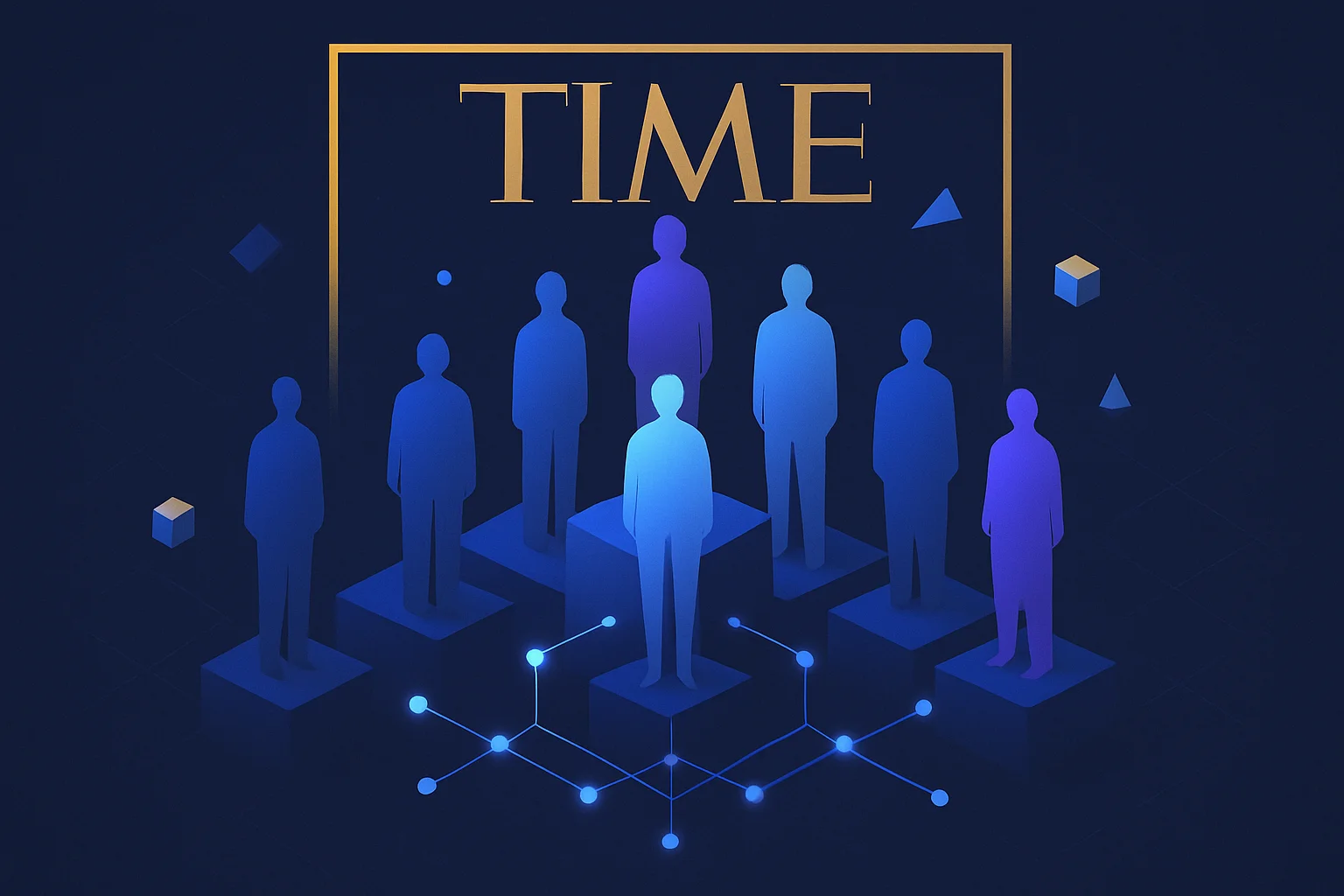
You've probably seen the news: TIME Magazine just named the "AI Architects" as Person of the Year 2025. And honestly, this choice says everything about the year we just lived through. AI is no longer some geeky thing in a lab - it's everywhere, in your phone, your job, your conversations. But who really are these 8 people deciding humanity's future from their Silicon Valley offices?
In this article
Why TIME made this historic choice
On December 11, 2025, TIME Magazine announced its decision: the "AI Architects" are the Person of the Year. This is only the third time in the magazine's history (since 1927) that a non-person in the strict sense has received this distinction. The precedents? The personal computer in 1982 and the endangered Earth in 1988.
But note that TIME was very clear: they chose the people behind AI, not the technology itself. As Sam Jacobs, the editor-in-chief, explained: "2025 is the year when the potential of artificial intelligence exploded into the open, and it became clear there would be no turning back."
The year everything changed
The thing is, 2025 was truly the tipping point year. AI went from a technology explored by early adopters to a central element of daily life. You can't read anything without coming across AI news. No business leader could talk about the future without mentioning this revolution.
And the numbers speak for themselves: ChatGPT generates 2.5 billion prompts per day. Claude now writes 90% of its own code. Tools like Cursor have reached $1 billion in annual revenue. Game changer.
The 8 faces building our future
TIME identified 8 key people. Spoiler alert: 5 of them are already billionaires with a combined fortune of $870 billion. Here's the complete lineup:
| Name | Company | Key Role |
|---|---|---|
| Sam Altman | OpenAI | CEO, creator of ChatGPT |
| Jensen Huang | Nvidia | CEO, AI chip supplier |
| Demis Hassabis | Google DeepMind | CEO, 2024 Nobel Prize winner |
| Dario Amodei | Anthropic | CEO, AI safety pioneer |
| Elon Musk | xAI / Tesla | CEO, applied AI |
| Mark Zuckerberg | Meta | CEO, open-source strategy |
| Lisa Su | AMD | CEO, Nvidia chip alternative |
| Fei-Fei Li | World Labs / Stanford | Founder, spatial intelligence |
To illustrate this choice, TIME commissioned two covers. One recreates the famous 1932 "Lunch Atop a Skyscraper" photo, with the 8 tech leaders sitting on a beam above New York. The other shows these same faces amid scaffolding surrounding the letters "AI" - a perfect metaphor for a work in constant construction.
What each architect brings to the revolution
Sam Altman - The Democratizer
Sam Altman made AI accessible to the general public. ChatGPT broke all records: 100 million users in 2 months (TikTok took 9 months, Instagram 2.5 years). In January 2025, he announced Stargate, a $500 billion investment to build AI data centers in the United States. This guy thinks big.
Jensen Huang - The Infrastructure Architect
Without Nvidia, there would be no modern AI. Jensen Huang's chips control 90% of the market for GPUs used to train models. Nvidia is now worth $2.9 trillion. As he himself says: "It's the most impactful technology of our time."
Demis Hassabis - The Scientist
The CEO of Google DeepMind has solved problems that scientists thought were impossible. AlphaFold, his masterpiece, predicts protein structures in hours instead of years. The result? The 2024 Nobel Prize in Chemistry. Not bad for a guy who started out creating video games.
Dario Amodei - The Guardian
Dario left OpenAI in 2021 because he felt things were moving too fast without enough caution. He founded Anthropic with his sister Daniela to build AI that is reliable and aligned with human values. Claude is the result of this philosophy. Anthropic has raised over $33 billion - proof that safety can also be a business model.
The other key players
Elon Musk applies AI in the real world (Tesla, robotics). Mark Zuckerberg is betting everything on open-source with Llama. Lisa Su is building the alternative to Nvidia with AMD chips. And Fei-Fei Li explores spatial intelligence - AI that understands the world in 3D.
Pros and cons of this power concentration
+ The Pros
- Unprecedented innovation: AI solves 30-year-old math problems, predicts hurricanes 3,000 times faster
- Explosive productivity: Nvidia engineers quadrupled their output without doubling headcount
- Democratized access: powerful tools accessible to everyone, for free or nearly so
- Scientific breakthroughs: medicine, climate, biology - everything is accelerating
- Job creation: new professions, new valued skills
- The Cons
- Power concentration: 8 people decide humanity's technological future
- Massive energy consumption: AI data centers will emit 80 Mt of CO2 in 2025
- Job destruction: automation faster than workforce adaptation
- Disinformation risks: distinguishing real from fake is becoming harder
My advice
To be honest, what strikes me most about this story is the acceleration. Three years ago, ChatGPT didn't exist. Today, these 8 people are compared to the industrialists of the 19th-century Gilded Age. Don't stay a spectator. Learn to use these tools now, understand their limits, and keep a critical eye on the decisions of these "architects." AI isn't going away - you might as well be on the train rather than on the platform.
What this means for you
Mainstream AI is now
According to a study cited by TIME, 85% of Gen Z has used an AI chatbot at least once. That's almost double that of boomers (33%). The adoption rate is unprecedented in tech history.
Opportunities to seize
- Productivity: tools like Cursor or Claude Code allow developers to code 10x faster
- Creativity: image, text, and music generation at your fingertips
- Learning: access to a personalized tutor 24/7
Questions to ask yourself
- How is AI impacting my industry?
- What skills do I need to develop to stay relevant?
- How do I distinguish authentic content from AI-generated content?
Frequently asked questions
Who exactly are the 8 AI architects named by TIME?
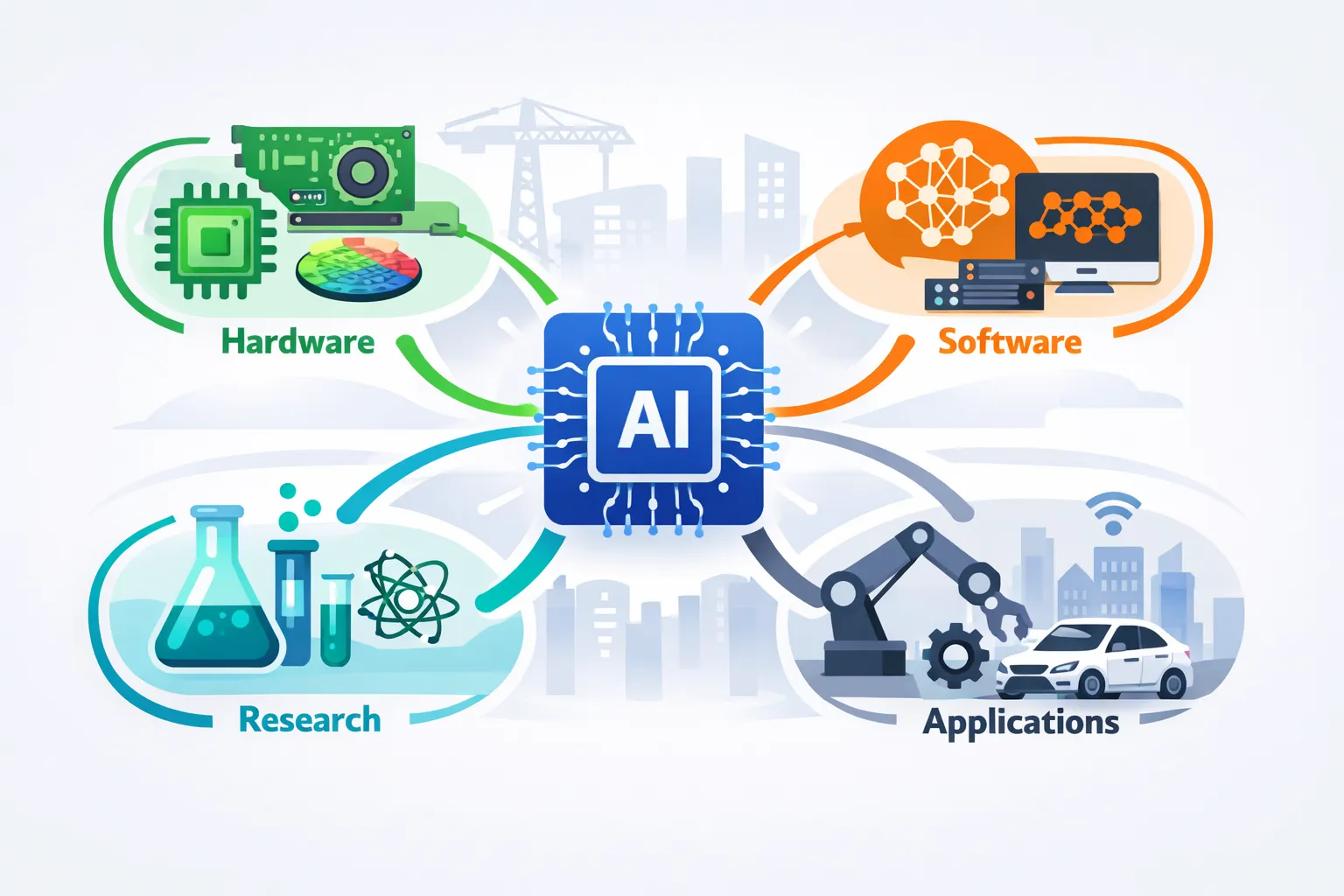
The 8 personalities are: Sam Altman (OpenAI), Jensen Huang (Nvidia), Demis Hassabis (Google DeepMind), Dario Amodei (Anthropic), Elon Musk (xAI/Tesla), Mark Zuckerberg (Meta), Lisa Su (AMD), and Fei-Fei Li (World Labs/Stanford). They represent the different facets of the AI revolution: model creation, hardware infrastructure, fundamental research, and applications.
Why didn't TIME choose AI itself as Person of the Year?
TIME deliberately chose people rather than the technology to emphasize that human decisions shape AI. The magazine has previously honored non-humans (the computer in 1982, the Earth in 1988), but this time, the focus is on human responsibility in developing this technology.
What is the combined fortune of these 8 tech leaders?
Five of the eight architects (Musk, Zuckerberg, Huang, Altman, and Su) are billionaires with a combined fortune of approximately $870 billion according to Forbes. This concentration of wealth illustrates the scale of the ongoing AI revolution.
What is the Stargate project announced by Sam Altman?
Stargate is a $500 billion investment project announced in January 2025 by Sam Altman, Larry Ellison, and Masayoshi Son. The goal: build AI data centers across the United States. It's one of the largest physical infrastructure projects in history.
Conclusion
TIME Magazine made a powerful statement with this choice. The "AI Architects" aren't just tech company executives - they are literally the people deciding the future of our species. Whether you're enthusiastic or worried, one thing is certain: AI is here to stay, and understanding who builds it has become essential.
The age of thinking machines has arrived. And now, it's up to us to decide how we want to live with them.
Sources: TIME Magazine, PBS News, CBS News, Forbes